Best Luxury Expedition Options: Definitive Expert Guide
Polar sea ice traversing, remote archipelagic marine navigation, and high-latitude wilderness exploration operating at the extreme boundaries of adventure travel demand an extraordinary degree of hull fortification, ice-pilot expertise, and rigorous meteorological contingency planning. When high-net-worth travelers, private charter managers, and institutional voyage curators assess journeys into uncharted environments, surface-level amenities such as onboard caviar service, spa suites, or glossy promotional brochures provide zero indication of whether a vessel possesses the Polar Class hull certifications, redundant propulsion systems, and advanced satellite routing required to survive unpredictable polar gales. Selecting appropriate travel formats requires an analytical dissection of dynamic ice-breaking limits, medical evacuation logistics, environmental permit compliance, and responsive expedition operations teams capable of transforming remote danger into controlled discovery.
Contemporary high-end adventure travel requires a definitive departure from historical models where polar cruises and remote safaris relied on rigid cruise itineraries, standard tourist landings, and siloed hospitality operations disconnected from volatile environmental realities. Modern travelers and voyage architects must synchronize booking lifecycles with sophisticated meteorological forecasting, strict indigenous community partnership agreements, and integrated safety protocols that absorb the intense operational pressures of remote navigation without compromising ecological preservation or participant security. This operational reality demands an exhaustive, data-driven auditing protocol designed to prevent mechanical failures and shield high-value travel investments from sudden environmental shutdowns.
This reference manual establishes a rigorous framework for evaluating, benchmarking, and selecting the best luxury expedition options. By deconstructing historical evolution, analytical mental models, variable logistical formats, and structural risk parameters, this guide provides the deep structural perspective required to evaluate elite exploration journeys with total precision.
Understanding “best luxury expedition options.”

Evaluating what constitutes the best luxury expedition options requires moving past the superficial allure of sleek yacht silhouettes, fine dining rooms, or promotional marketing claims regarding remote wilderness access. A robust program assessment framework integrates Polar Class hull ratings, dedicated Zodiac embarkation platform stability, on-board scientific research laboratories, and flexible expedition contract terms into a unified evaluation matrix. Whether analyzing a Northwest Passage icebreaker voyage, an Antarctic Peninsula private air-cruise, or a deep-submersible trench exploration, structural value hinges entirely on how effectively the physical vessel and expedition staff support safe remote access, expert-led field interpretation, and uncompromised personal safety.
Common misconceptions regarding elite travel planning frequently assume that any luxury megayacht can navigate high-latitude polar waters or remote tropical archipelagos without specialized engineering or local permits. Planners routinely underestimate how shifting pack ice, sudden katabatic winds, and complex international maritime border regulations can strand vessels, forcing abrupt itinerary cancellations. Furthermore, decision-makers often ignore the medical vulnerability of remote travel, where thousands of miles separate travelers from advanced trauma care facilities.
Oversimplifying these engineering, environmental, and contractual variables exposes travelers to severe logistical gridlock, physical danger, and financial loss. An advanced evaluation framework synthesizes ice-class vessel audits, medical evacuation logistics modeling, and total cost of ownership frameworks to identify programs that guarantee long-term operational success. When discerning travelers systematically vet the best luxury expedition options, they establish quantitative metrics reflecting hull classification and ice-pilot experience rather than surface-level aesthetic luxury.
Deep Contextual Background
The evolution of elite remote travel and the rise of structured journey evaluation reflect the broader transformation of maritime engineering, global exploration culture, and luxury tourism over the past century. Historically, polar and deep-wilderness expeditions were restricted to government-funded scientific research vessels, military icebreakers, or rugged mountaineering teams enduring extreme physical deprivation. The late-twentieth-century conversion of surplus research hulls into commercial passenger vessels introduced early expedition cruising, offering adventurous travelers rudimentary berths in remote polar regions.
Concurrently, the twenty-first-century boom in experiential ultra-luxury travel, combined with advancements in naval architecture and satellite navigation, transformed expedition vessels from utilitarian research boats into floating five-star hotels equipped with helicopters, submersibles, and state-of-the-art stabilization systems. The contemporary era is defined by the convergence of stringent environmental sustainability regulations, zero-emission propulsion research, and high-density scientific programming, making the mastery of expedition selection a critical pillar of modern adventure luxury.
Conceptual Frameworks and Mental Models
Navigating the complexities of conceptualizing, structuring, and evaluating elite expedition programs requires robust mental models that synthesize vessel engineering, environmental risk mitigation, and experiential depth.
1. The Polar Class and Hull Redundancy Matrix
This model tracks how ice-strengthened steel plating, double-bottom hulls, and redundant propulsion systems protect vessels against multi-year pack ice and uncharted underwater hazards.
2. The Meteorological Contingency and Weather Buffer Index
This conceptual model analyzes seasonal wind patterns, wave height projections, and ice concentration data, evaluating how built-in schedule buffers absorb weather delays without compromising port clearance.
3. The Scientific Immersion and Expert Ratio Curve
This analytical framework evaluates the ratio of naturalists, marine biologists, and glaciologists to expedition passengers, measuring the educational depth and intellectual rigor of field landings.
Key Categories or Variations of Expedition Programs
Categorizing the vast spectrum of high-end expedition offerings requires examining how distinct geographical scopes, vessel types, and operational models shape the travel experience.
-
The Polar Class Icebreaker Passage: Deep-south or high-north voyages crossing pack ice into Antarctica or the Northwest Passage aboard heavy-duty reinforced vessels. Trade-off: Access to unreachable wilderness frontiers balanced by rough open-ocean crossings and colder, less predictable weather.
-
The Private Aviation Antarctic Air-Cruise: Expeditions bypassing the Drake Passage entirely via private jet landing directly onto blue-ice runways in the Antarctic interior. Trade-off: Elimination of seasickness and rapid transit balanced by extreme weather vulnerability for aircraft landings.
-
The Remote Pacific Atoll Submersible Journey: Tropical deep-water explorations utilizing onboard manned submersibles to survey untouched coral trenches and marine life. Trade-off: Extraordinary marine discovery and tropical comfort balanced by complex technical maintenance and strict depth permits.
-
The Arctic Svalbard Wildlife Circuit: Specialized marine voyages tracking polar bears, walrus colonies, and calving glaciers along high-latitude Norwegian archipelagos. Trade-off: High concentration of iconic wildlife and dramatic scenery balanced by strict environmental protection zones.
-
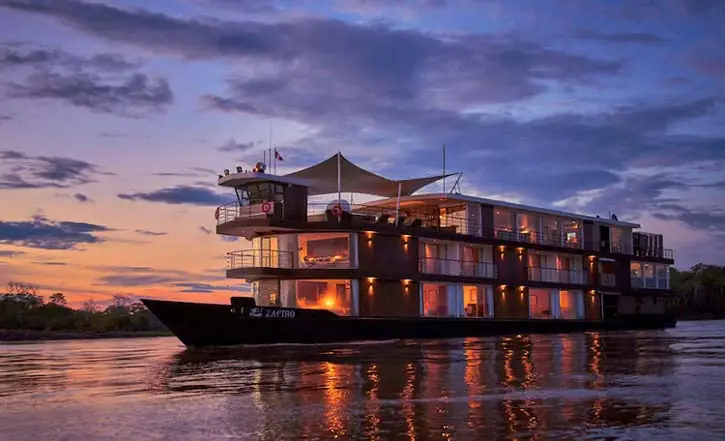
The Amazon Deep-River Eco-Expedition: Shallow-draft luxury river vessel explorations navigating restricted tributaries of the Amazon basin with indigenous guides. Trade-off: Unmatched biological diversity and cultural immersion balanced by high humidity, insects, and tropical heat.
-
The Patagonian Fjord and Glacier Traverse: Coastal expeditions winding through southern Chilean and Argentine fjords, combining glacial hiking with luxury lodge stays. Trade-off: Dramatic landscapes and accessible logistics balanced by high annual rainfall and wind speeds.
Comparison of Expedition Program Categories
| Program Category | Primary Operating Region | Key Experiential Advantage | Core Operational Vulnerability |
| Polar Class Icebreaker | High Arctic / Antarctica | Unmatched access to heavy pack ice zones | Rough sea crossings like the Drake Passage |
| Antarctic Air-Cruise | Antarctic Interior | Rapid transit bypassing ocean crossings | Extreme weather dependence for aircraft |
| Pacific Atoll Submersible | Tropical Deep Ocean Trenches | Deep-sea exploration via submersibles | Complex technical gear maintenance |
| Amazon Eco-Expedition | South American River Basins | Rich biological and cultural immersion | High humidity and tropical insect exposure |
Realistic Decision Logic
When high-net-worth travelers and private charter coordinators evaluate how to select expedition programs, choices must hinge on physical endurance, temporal constraints, and specific wildlife or geographical interests. If a traveler seeks absolute immersion in historic polar exploration without enduring multi-day rough sea swells, an Antarctic air-cruise bypassing the Drake Passage represents the rational choice. Conversely, when organizers evaluate the best luxury expedition options involving comprehensive multi-week biological surveys and heavy ice navigation across the entire Northwest Passage, a Polar Class icebreaker vessel provides the necessary hull strength, fuel autonomy, and scientific infrastructure.
Detailed Real-World Scenarios and Operational Dynamics
To understand how different expedition categories and operational terms manifest in actual execution, consider four distinct real-world scenarios.
The Pack-Ice Embargo and Route Diversion
A luxury expedition vessel attempting to traverse the Northwest Passage encounters an unexpected multi-year ice plug blocking a critical strait, halting forward progress and threatening schedule adherence.
-
Constraints: Heavy ice concentration, lack of ice-breaker escort availability, and strict fuel consumption limits.
-
Decision Point: The expedition leader and ice master must immediately execute a pre-planned alternative route through southern channels, adjusting port-of-call timelines.
-
Failure Model: Booking rigid, inflexible itineraries without built-in geographic buffers or alternative route clearance permissions.
-
Second-Order Effect: Partnering with operators possessing experienced ice-pilots and flexible maritime permits prevents catastrophic itinerary abandonment.
The Katabatic Wind Zodiac Landing Cancellation
An expedition group scheduled for a shore landing on an Antarctic island faces sudden 60-knot katabatic winds sweeping off the ice sheet, making Zodiac deployment hazardous.
-
Constraints: Extreme wind speeds, dangerous sea state, and passenger safety mandates.
-
Decision Point: The expedition leader cancels the shore landing and deploys onboard naturalist lectures while repositioning the ship into a sheltered lee bay.
-
Failure Model: Yielding to passenger pressure to execute risky shore landings against the judgment of the professional safety team.
-
Second-Order Effect: Maintaining strict adherence to safety protocols preserves participant well-being and protects the operator from liability.
The Medical Evacuation from Remote Wilderness
A traveler on a remote Amazon eco-expedition suffers a severe cardiac event while trekking deep in the jungle, hours away from a conventional hospital.
-
Constraints: Geographic isolation, lack of local trauma infrastructure, and dense jungle canopy preventing helicopter landing.
-
Decision Point: The expedition medical officer stabilizes the patient, coordinates emergency satellite communication with search-and-rescue teams, and arranges riverboat transfer to a regional airstrip.
-
Failure Model: Failing to verify comprehensive emergency medical evacuation insurance and satellite communication protocols before departure.
-
Second-Order Effect: Contracting specialized expedition medical services and carrying onboard trauma kits ensures survival in remote environments.
The Mechanical Propulsion Failure in Polar Waters
A luxury expedition yacht suffers a main engine turbocharger failure while cruising off the coast of East Greenland, leaving the vessel with single-engine redundancy in ice-prone waters.
-
Constraints: Single-engine limitation, remote maritime location, and potential drift toward shore ice.
-
Decision Point: The chief engineer switches to auxiliary backup generators while the captain deploys a secondary electric propulsion motor to maintain steering control.
-
Failure Model: Operating remote expeditions on vessels lacking dual-engine redundancy or independent auxiliary steering systems.
-
Second-Order Effect: Restricting expedition bookings to vessels with fully redundant mechanical systems prevents catastrophic grounding events.
Planning, Cost, and Resource Allocation
Executing a comprehensive strategy to select, book, and manage elite expedition travel requires structured financial planning covering charter fees, specialized gear acquisition, medical evacuation insurance, and environmental permit levies.
Financial Dynamics and Cost Variability
| Operational Element | Estimated Financial Range | Primary Cost Driver | Financial Risk / Value Impact |
| Full Vessel Charter / Cabin Suite | $25,000 to $250,000+ / person | Vessel tier, polar destination, duration | Core financial investment of the expedition |
| Private Aviation Air-Cruise Surcharge | $15,000 to $60,000+ total | Blue-ice runway landing rights, jet charter | Eliminates rough ocean crossings safely |
| Medical Evacuation & Insurance | $2,500 to $12,000+ total | Geographic remoteness, repatriation scope | Essential safety net for extreme wilderness travel |
| Specialized Gear & Equipment | $1,500 to $6,000+ total | Extreme cold-weather layers, waterproof shells | Ensures physical comfort and safety in harsh climates |
Opportunity Costs and Resource Allocation
A frequent financial miscalculation made by luxury travelers involves booking discounted commercial cruise lines masquerading as expedition ships, failing to realize that lack of ice-strengthened hulls and absence of Zodiac landing craft severely restrict shore access. Committing capital to superficial luxury liners prevents travelers from reaching true wilderness sanctuaries. When analysts research the best luxury expedition options, they allocate financial resources toward vessels featuring reinforced hulls, high naturalist ratios, and comprehensive safety infrastructure.
Tools, Strategies, and Support Systems
Managing complex expedition workflows and ensuring seamless cross-channel coordination requires utilizing specialized maritime tracking software, satellite communication tools, meteorological portals, and direct liaison channels.
-
Global Maritime Distress and Safety System (GMDSS): International automated distress alerting and satellite communication networks for vessel tracking. Limitation: Dependent on satellite constellation stability and receiver hardware.
-
Real-Time Ice Concentration & Weather Routing (Copernicus / Windy): Advanced meteorological software tracking sea ice movement, barometric pressure, and wind vectors. Limitation: Requires professional ice master interpretation to apply to local navigation.
-
Satellite Messaging & Emergency Beacons (Garmin inReach / Iridium): Encrypted handheld communication devices connecting expedition members in remote terrain. Limitation: Limited bandwidth restricting data transmission to text and coordinates.
-
Expedition Management & Manifest Portals: Specialized software tracking passenger embarkation, Zodiac group rotations, and safety briefings. Limitation: Dependent on stable shipboard local area networks.
-
Medical Evacuation Coordination Portals (Medjet / Global Rescue): Specialized international networks managing emergency medical transport and hospital repatriation. Limitation: Subject to local weather constraints and air clearance permits.
-
Underwater Bathymetric Mapping Sonar: Shipboard acoustic mapping tools identifying uncharted reefs, shallows, and sea trenches. Limitation: Operates effectively only at moderate vessel speeds.
Risk Landscape and Failure Modes
Operating high-end expeditions and managing remote travel logistics without rigorous technical, environmental, and medical oversight introduces profound legal, financial, and safety hazards.
Taxonomy of Expedition Risks
-
Maritime Groundings and Ice Collisions: Hull breaches caused by uncharted rocks or multi-year pack ice.
-
Medical Emergencies and Evacuation Delays: Severe illness or injury in locations lacking local trauma care.
-
Meteorological Gridlock and Weather Delays: Extreme storms stranding passengers in remote ports or ice floes.
-
Regulatory and Permit Violations: Unlawful entry into protected ecological reserves or indigenous territories.
Compounding Risk Events
In expedition travel, minor initial oversights frequently compound into major operational crises. For example:
-
Initial Oversight: An expedition planner books a vessel for an Arctic voyage without verifying whether the ship carries certified ice pilots with local Arctic waterway experience.
-
Second-Compounded Complication: The vessel encounters unexpected drift ice in a narrow fjord, and the inexperienced captain miscalculates current vectors, wedging the hull against a submerged shelf.
-
Compounding Hazard: Rising winds push pack ice tighter around the stranded hull, pinning the ship and cutting off open water escape routes.
-
Critical Failure: The vessel requires an expensive, multi-day commercial icebreaker rescue operation, stranding passengers and triggering international maritime investigations.
This cascading vulnerability illustrates why rigorous pre-booking safety audits and experienced ice-pilot staffing are non-negotiable requirements for expedition travel.
Governance, Maintenance, and Long-Term Adaptation
Sustaining a disciplined approach to selecting and evaluating premier expedition programs requires adherence to strict pre-departure audits, safety drills, and post-voyage debrief protocols.
Monitoring and Review Cycles
Expedition operators, private curators, and luxury travel advisors must conduct continuous safety protocol reviews, vessel structural maintenance audits, and post-voyage environmental impact assessments, updating itinerary planning criteria based on real-world performance metrics. Maintaining active oversight ensures long-term expedition safety.
Layered Operational Execution Checklist
-
Hull Classification & Ice-Pilot Audit: Verify Polar Class certification ratings and confirm captain ice navigation credentials.
-
Medical Readiness & Evacuation Plan: Confirm onboard doctor credentials, trauma supply inventory, and Medevac insurance coverage.
-
Meteorological & Routing Buffer Check: Review itinerary schedule buffers and evaluate alternative weather contingency routes.
-
Zodiac & Safety Equipment Inspection: Audit life rafts, outboard engines, dry suits, and emergency radio beacons.
-
Environmental & Community Permit Review: Confirm compliance with IAATO, AECO, and local indigenous territory entry permits.
Measurement, Tracking, and Evaluation
Assessing the overall operational success and experiential return on investment of elite expedition travel requires balancing quantitative safety metrics with qualitative enrichment signals.
Leading vs. Lagging Indicators of Success
-
Leading Indicators (Predictive of positive outcomes):
-
Flawless execution of pre-departure safety briefings, medical screenings, and equipment fittings.
-
Successful completion of vessel mechanical stress tests, ice-strengthening audits, and emergency drills.
-
Clear, structured contingency routing documentation established before embarkation.
-
High naturalist-to-passenger ratios and expert lecture scheduling.
-
-
Lagging Indicators (Retrospective outcome metrics):
-
Traveler satisfaction scores regarding wilderness access, wildlife sightings, and educational depth.
-
Absolute absence of hull incidents, medical emergencies, or unmanaged weather delays.
-
Net operational execution matching itinerary milestones without safety compromises.
-
Long-term repeat booking rates and positive environmental stewardship feedback.
-
Formal Documentation Examples
-
Master Expedition Log and Weather Routing Plan: The comprehensive document tracking daily navigation coordinates, meteorological forecasts, and landing schedules.
-
Vessel Safety and Mechanical Audit Record: The official evaluation log tracking hull inspections, engine redundancies, and safety equipment certifications.
-
Post-Voyage Environmental and Passenger Debrief Report: The analytical review compiling participant feedback, wildlife observation logs, and ecological impact data.
Common Misconceptions and Oversimplifications
-
Myth: Any luxury cruise ship advertising remote destinations can safely navigate high-latitude polar ice packs.
-
Correction: Standard cruise ships lack ice-strengthened hulls and double bottoms; polar voyages require certified Polar Class vessels. Travelers must evaluate vessel engineering when they identify the best luxury expedition options.
-
-
Myth: Modern satellite forecasting eliminates the risk of weather disruptions on remote expeditions.
-
Correction: High-latitude weather is notoriously volatile; expedition itineraries must incorporate built-in schedule buffers to absorb storms.
-
-
Myth: Standard travel insurance covers immediate emergency helicopter evacuation from polar ice or deep jungle terrain.
-
Correction: Standard policies exclude extreme remote rescue; travelers must secure specialized expedition medical evacuation riders.
-
-
Myth: Expedition travel guarantees close wildlife encounters on demand.
-
Correction: Wildlife behavior is unpredictable; ethical expeditions prioritize observation without disturbing natural habitats.
-
-
Myth: Booking software replaces the need for an experienced expedition leader on-site.
-
Correction: Automated software manages reservations, but human leadership and ice-pilot expertise are essential for real-time safety decisions.
-
-
Myth: Environmental sustainability standards in expedition travel are merely marketing gimmicks.
-
Correction: Leading operators adhere to strict IAATO and AECO zero-impact guidelines, protecting fragile ecosystems from over-tourism.
-
Ethical, Practical, or Contextual Considerations
Navigating the operational realities of producing elite expedition travel involves balancing high-end luxury consumption against the broader ethical obligation to preserve pristine wilderness ecosystems, respect indigenous sovereignty, support local conservation efforts, and adhere to strict maritime environmental protocols. While maximizing discovery and personal comfort is paramount, ensuring that operators practice responsible wildlife viewing, minimize carbon footprints, and contribute financially to local conservation projects preserves the integrity of the destination. Approaching expedition evaluation through operational rigor, technical precision, and intellectual honesty ensures secure, sustainable, and world-class adventure travel.
Conclusion
Mastering the selection, evaluation, and management of elite expedition itineraries requires an uncompromising integration of naval engineering, meteorological forecasting, emergency medical planning, and financial discipline. Moving past surface-level aesthetic marketing to embrace comprehensive operational analysis ensures that discerning travelers and expedition directors can execute complex remote programming with absolute confidence and safety.
Whether evaluating Polar Class icebreaker passages, private aviation Antarctic air-cruises, remote Pacific submersible journeys, or Amazon eco-expeditions, the fundamental objective remains unchanged: achieving seamless harmony between extreme remote exploration and uncompromised safety infrastructure. Prioritizing systematic curation, operational rigor, and uncompromised intellectual honesty transforms expedition planning into a secure, enduring foundation of unforgettable discovery.